
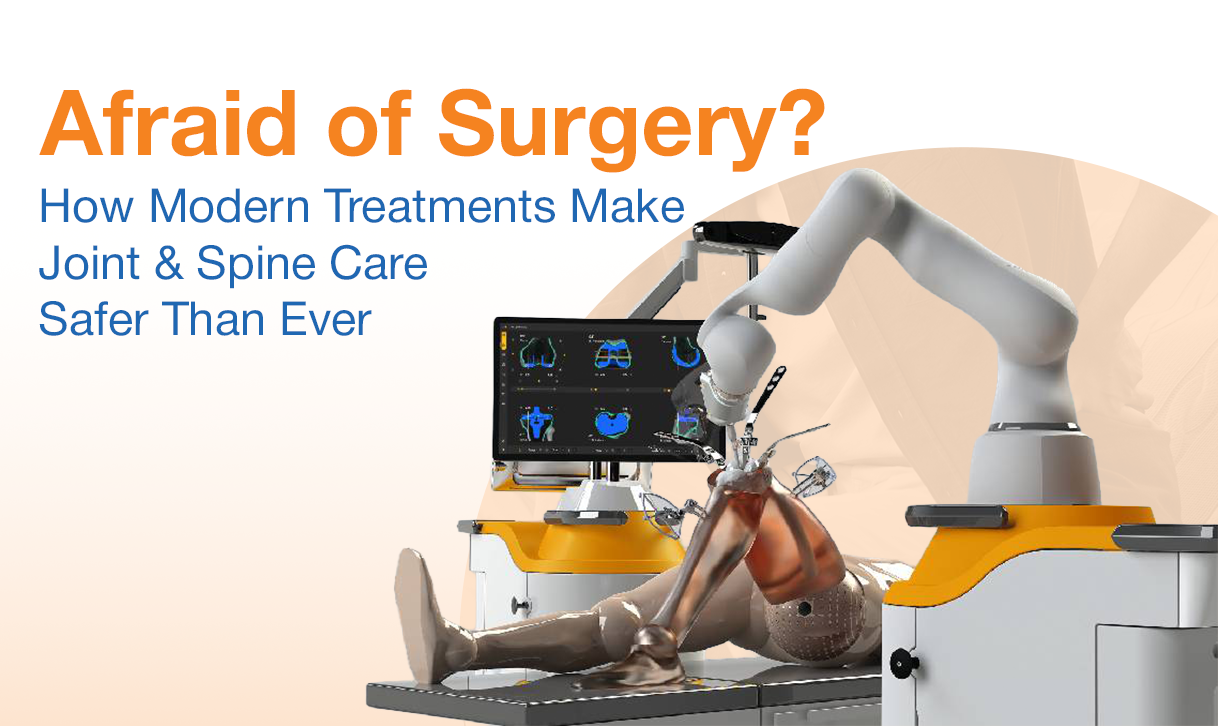
Afraid of Surgery? How Modern Treatments Make Joint & Spine Care Safer Than Ever
Most people don't say it directly, but the fear is there.
They sit across the table and talk about pain, stiffness, and difficulty moving. Somewhere in between, it comes out. They don't want surgery. Not because they don't want relief, but because they're afraid of what surgery might take away.
Fear of surgery usually isn't about the operation itself. It's about what comes after. Will I walk properly again. Will the pain really reduce. Will recovery drag on. Will life feel limited. These questions make people wait longer than they should.
Where This Fear Usually Comes From
A lot of this fear comes from memory. Someone in the family had surgery years ago and struggled. Someone took months to recover. Someone never quite got back to normal. Those stories stay with people.
The problem is that joint and spine treatment today is not the same as it was even ten or fifteen years ago. But the fear hasn't updated itself. People still imagine large cuts, long bed rest, and loss of independence.
What Many People Don't Realise About Treatment Today
One important thing gets missed often. Most joint and spine problems do not start with surgery.
In many cases, treatment begins with understanding what is actually causing the pain. Not guessing. Not assuming age is the reason. Imaging today helps identify whether pain is coming from muscle strain, ligament stress, disc issues, joint wear, or inflammation.
Once the cause is clear, treatment is usually conservative first. Physiotherapy. Medication. Targeted injections. Changes in movement and posture. Many patients improve with these steps alone. Surgery enters the conversation only when these options stop helping or when movement becomes significantly limited.
When Surgery Becomes Part of the Discussion
When surgery is needed, it is usually because the problem has reached a point where daily life is affected. The difference today is how surgery is done. Techniques are more precise. Incisions are smaller. Damage to surrounding tissue is limited. Pain control is better. Movement is encouraged earlier.
The aim is not just to fix something structurally, but to help the body return to function with less disruption. For many patients, this changes how recovery feels compared to what they imagined.
Recovery Is No Longer Guesswork
Recovery used to feel uncertain. People didn't know what was normal and what wasn't. That has changed. Rehabilitation is now planned alongside treatment. Patients are guided on when to move, how much to move, and what to avoid. Physiotherapy is structured, not optional. Pain is monitored, not dismissed.
Knowing what comes next removes a large part of the fear. The NHS also notes that advances in orthopedic care have improved safety and recovery outcomes over time.
Why Waiting Often Makes Things Harder
Many people wait because pain is still manageable. They change how they walk. They stop certain activities. They sleep differently. These adjustments slowly affect the rest of the body. Muscles compensate. Posture changes. Pain spreads.
By the time care is finally sought, the problem is often more complex than it needed to be. Early assessment usually opens more treatment options. Waiting rarely simplifies things.
How Joint and Spine Care Is Approached at Sai Bhaskar Hospitals
At Sai Bhaskar Hospitals, joint and spine care starts with listening. Patients are clearly evaluated based on how pain affects their day-to-day life, and not just on the basis of what scans show. Treatment is planned step by step, beginning with the least invasive options that make sense.
When surgery is recommended, it is explained clearly. What it addresses. Why it is needed. What recovery realistically looks like. The goal is not to rush decisions, but to make them informed and calm.
Closing Thought
Being afraid of surgery is understandable. But fear based on old experiences often hides how much treatment has changed.
Modern joint and spine care is safer, more controlled, and more focused on recovery than ever before. The decision becomes easier when it's based on how things work today, not how they used to.