
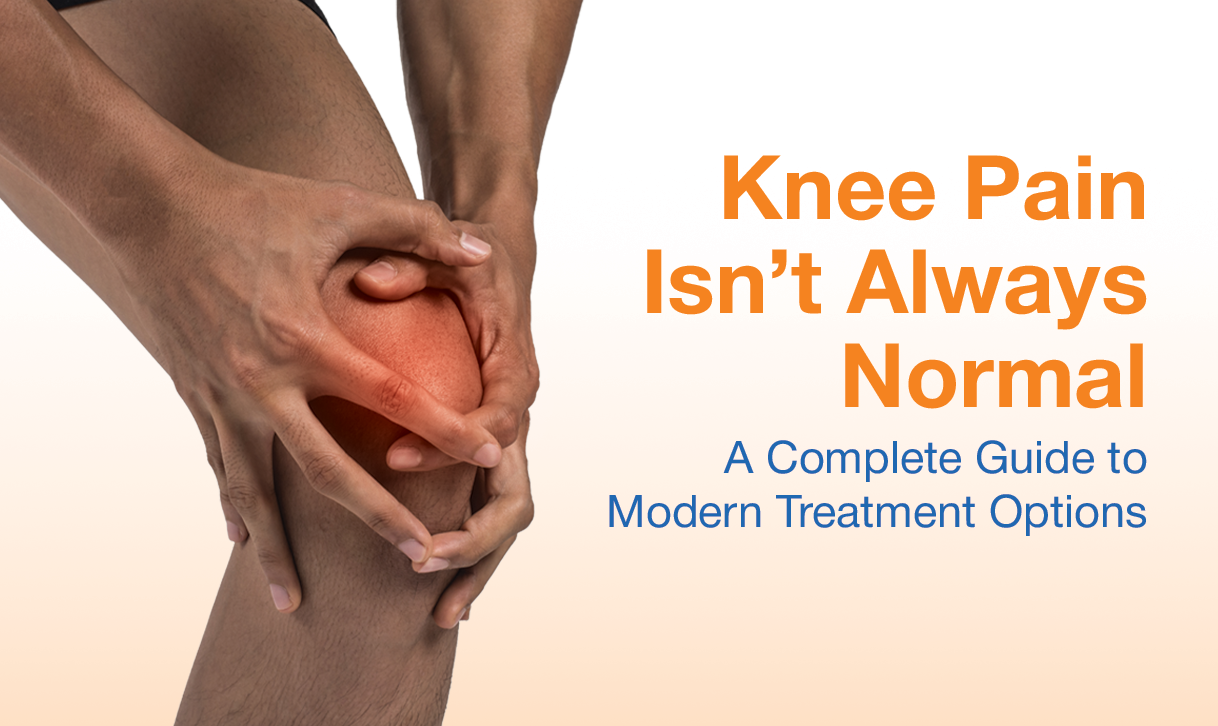
Knee Pain Isn't Always Normal: A Complete Guide to Modern Treatment Options
Knee pain usually doesn't start as a big problem.
For most people, it begins quietly. A slight ache after walking. Discomfort while climbing stairs. A feeling that the knee feels weaker than before. Because the pain is manageable at first, it's easy to ignore.
People adapt. They slow down. They avoid certain movements. They stop sitting on the floor. Over time, those adjustments start feeling normal.
That's where knee pain becomes tricky. Because it's common, it's often accepted as part of life. But pain that keeps returning is not something the body does without a reason.
When Knee Pain Should Not Be Ignored
Occasional knee discomfort can happen after exertion or strain.
What's different is pain that shows up every day or most days. Pain that doesn't fully settle. Pain that makes you think twice before standing, walking, or using stairs.
When knee pain starts influencing how you move or what you avoid, it's no longer just tiredness or age-related stiffness. It's a signal that something inside the joint needs attention.
Ignoring it doesn't usually solve the problem. It often shifts the strain to other joints and muscles, creating more issues over time.
Why Knee Pain Develops Slowly
Many knee problems don't begin with an injury.
They build gradually. Cartilage wears down. Ligaments lose strength. Muscles stop supporting the joint properly. Old injuries that were never fully treated resurface years later.
Because this process is slow, people don't notice the change immediately. The knee still works. It just doesn't feel the same.
Different knee conditions can feel similar in the early stages. That's why relying only on symptoms often slows things down. A proper evaluation looks at how the knee moves, how stable it feels, how the joint is aligned, and how the pain changes with activity and time.
How Knee Pain Affects Daily Life
Knee pain rarely stays confined to the knee itself.
It affects confidence. Walking feels uncertain. Balance feels off. People become less active without realising it. That reduction in movement leads to muscle weakness, which then puts more pressure on the knee.
This cycle often explains why knee pain feels worse after months of adjustment. The joint is not only painful, it's also unsupported.
By the time people seek help, the pain has already changed how they live.
Modern Treatment Is Not One-Size-Fits-All
Knee treatment today is very different from what many people expect.
Surgery is rarely the first step. Most people improve with early treatment that focuses on the problem rather than jumping straight to procedures.
That might mean guided physiotherapy to rebuild movement and strength, medication to calm inflammation, or injections to ease joint discomfort. In some cases, small procedures are needed, but only when simpler options don't help. Today, imaging and tests make it easier to understand what's actually causing the pain, instead of relying on guesswork. This allows treatment to be specific, not generic.
When Surgery Is Considered
Surgery is usually discussed only when other treatments no longer help. Even then, the approach has changed. Modern techniques aim to preserve as much of the natural joint as possible and reduce recovery time. Rehabilitation plays a major role in outcomes, not just the procedure itself.
Timing matters. Waiting too long often narrows the choices at hand. Moving too quickly can lead to treatment that isn't really needed. The right time usually becomes clear by looking at how pain is affecting daily routines and how well the joint is actually working.
Why Early Evaluation Makes a Difference
Knee problems rarely resolve on their own once they become persistent.
An early check helps understand where the pain is really coming from. It could be cartilage wearing down, strained ligaments, alignment problems, or ongoing inflammation. When the cause is clear early on, treatment is usually simpler and movement is easier to maintain over time.
The NHS also advises medical evaluation when knee pain continues or interferes with movement instead of settling naturally.
How Knee Pain Is Approached at Sai Bhaskar Hospitals
At Sai Bhaskar Hospitals, knee pain is evaluated patiently and carefully.
The focus is on listening. Understanding how pain started. How it behaves. How it affects daily activities. Treatment is shaped around the person, not guessed based on symptoms alone.
Current diagnostic methods and treatment options help control pain while keeping the joint moving the way it should. The goal is not just pain relief, but helping patients regain confidence in how they move.
Closing Thought
Knee pain is common. That doesn’t make it normal.
Pain that keeps returning is the body asking for attention. With the options available today, addressing knee pain early often helps avoid longer-term restrictions later on.
Paying attention sooner often makes treatment simpler later.