Minimally Invasive Orthopedic Treatments:
Minimally invasive orthopedic treatments can reduce pain and recovery time in the right cases.
Here’s how they work, when they help, and what recovery usually looks like.
Benefits, Risks & Recovery Time
Most people come in expecting one thing when surgery is mentioned. A big incision. Weeks of bed rest. A long, uncomfortable recovery.
That expectation hasn’t caught up with how orthopedics works today. Many joint and bone problems can now be treated without opening up the entire area. Smaller incisions. More focused work.
Less disruption to the surrounding tissue. That shift alone changes how patients experience surgery and recovery. At Sai Bhaskar Hospitals, minimally invasive orthopedic treatment is not positioned as the “better” option by default. It’s simply one of the options, used when it fits the problem in front of us.
What “Minimally Invasive” Actually Means in Practice
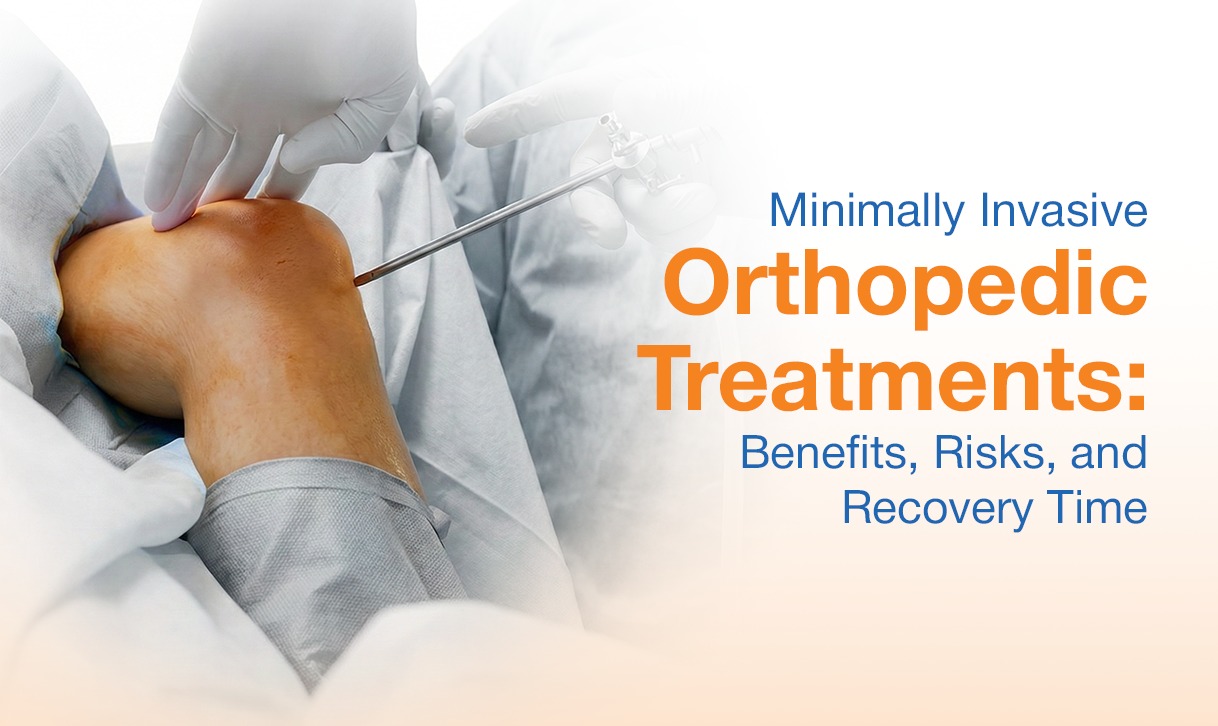
Minimally invasive does not mean minor. It means access is limited to what’s needed.Instead of a long incision, the surgeon works through small openings. A camera shows the inside of the joint clearly on a screen.
Instruments are designed to work in tight spaces without pulling muscles or tissue aside unnecessarily.
A common example is arthroscopy, where knee, shoulder, or ankle issues can be assessed and treated without fully opening the joint. The work being done inside is still precise and serious. The difference is how much the body has to go through to allow that work.
Why the Body Often Recovers Better
When less tissue is disturbed, the body usually responds differently. Swelling tends to be lower. Pain is often easier to control. Many patients feel confident moving the joint sooner than they expected. That early movement plays a big role in preventing stiffness and helping strength return gradually.
Recovery still takes effort. But it often feels more manageable. The Mayo Foundation also notes that minimally invasive surgery can allow faster return to daily activities in suitable cases, because the body has less healing to do around the surgical site.
Where These Treatments Are Commonly Used
Minimally invasive orthopedic treatments are usually chosen when the problem is clearly defined. Meniscus tears. Ligament injuries. Cartilage damage. Certain shoulder and ankle conditions. In these situations, surgeons can reach the affected area directly without disturbing the rest of the joint.
For patients, this often means an easier start to rehabilitation. Less guarding. Less fear of movement. This will help them with a smoother transition into physiotherapy. But not every condition will can this approach.
Severe joint damage, complex fractures, or advanced arthritis may still need open surgery. The choice depends on what imaging shows and how stable the joint needs to be long term.
Risks Still Exist, Even With Smaller Incisions
Smaller cuts do not remove risk. Infection, swelling, stiffness, and internal bleeding are still possible. These risks exist in all orthopedic procedures, regardless of incision size.
Sometimes a surgeon begins with a minimally invasive approach and realises that better access is needed. Converting to open surgery in that moment is a safety decision, not a complication. This is why careful evaluation before surgery matters as much as the technique itself.
What Recovery Usually Feels Like
Recovery is usually quicker, but it is not instant. Many patients are able to walk or move the joint earlier compared to open surgery. Pain is often easier to manage. Hospital stays are shorter in many cases.
Physiotherapy still matters. The joint needs to relearn movement, strength, and balance. Skipping or rushing rehabilitation can undo the benefits of the surgery itself. What makes the biggest difference is steady participation, not how small the incision was.
How Decisions Are Made at Sai Bhaskar Hospitals
At Sai Bhaskar Hospitals, minimally invasive orthopedic treatment is considered after understanding the full picture. Symptoms. Imaging. Lifestyle. Work demands. Long term joint health. All of this is weighed before suggesting an approach.
If a minimally invasive option can address the issue safely and reduce recovery strain, it is discussed. If an open procedure offers better durability or control, that is explained just as clearly. The aim is not to sell a technique. It is to choose the right path for the patient
Closing Thought
Minimally invasive orthopedic treatments have changed how many people experience surgery. They can reduce pain, shorten recovery, and help patients return to movement sooner when used appropriately.
The best outcomes come from right evaluation and surgery, with committed rehabilitation. When these pieces line up, recovery will feel less overwhelming and more predictable.