
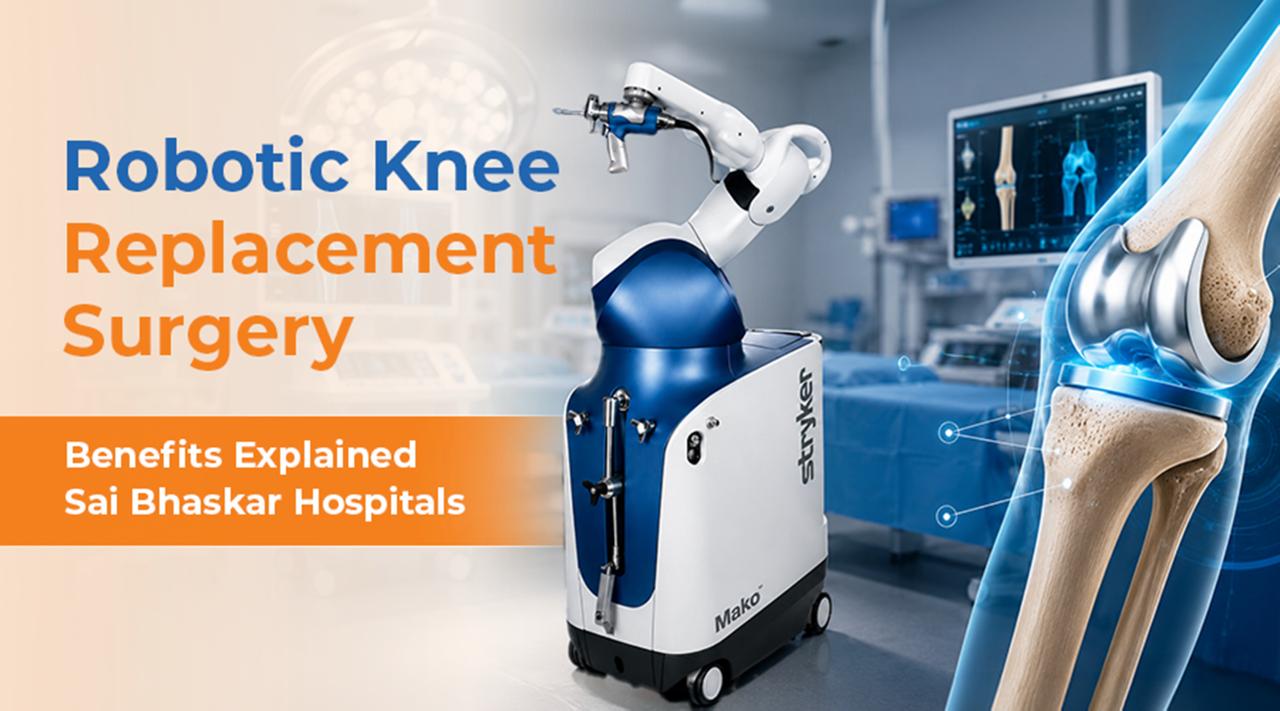
Robotic Knee Replacement Surgery: Benefits Explained
Quick Summary
Robotic knee replacement surgery is an option for people who need a knee replacement. It uses computer planning and robotic assistance during the operation to help the surgeon plan and position the implant. The surgeon still performs the surgery. Robotic treatment can be useful in some cases, but it isn't needed for every patient.
Table of Contents
- What Is Robotic Knee Replacement Surgery?
- Why Does Precision Matter?
- What Are the Benefits of Robotic Knee Surgery?
- Does Robotic Surgery Mean Faster Recovery?
- Is Robotic Knee Replacement Minimally Invasive?
- Robotic vs Conventional Knee Replacement
- Choosing a Knee Replacement Hospital in Guntur
- When Should You See a Specialist?
- Final Thoughts
- FAQs
What Is Robotic Knee Replacement Surgery?
A knee replacement is usually considered when pain and stiffness have become difficult to manage, and other treatments aren't helping enough.
Robotic knee replacement is one way of doing the surgery.
The robot doesn't replace the surgeon. The surgeon performs the operation and uses the robotic system as a tool.
Before surgery, scans of the knee can be used to make a plan. The surgeon can see the condition and alignment of the joint and plan how the damaged bone will be prepared and where the implant should go.
The system can then provide information during surgery to help with that plan.
Sai Bhaskar Hospitals in Guntur offers robotic-assisted total knee and hip replacement using the Mako Smart Robotic Arm by Stryker.
Why Does Precision Matter?
There is quite a bit involved in putting a new knee in place.
The damaged bone has to be prepared, and the implant has to be positioned properly. The surgeon also has to consider the alignment of the knee.
This isn't exactly the same for everyone.
One patient may have a different bone shape or alignment from another. The amount of damage can be different too.
Robotic planning gives the surgeon more information about the patient's own knee before the operation. It can also provide measurements during surgery.
That can be useful when the surgeon is working on precision knee surgery.
What Are the Benefits of Robotic Knee Surgery?
The main benefits are related to planning and guidance.
The surgeon can plan the procedure before surgery using information from the patient's knee. This can help with decisions about bone preparation and implant placement.
The system can also provide information during the operation. This helps the surgeon check the planned alignment and positioning while carrying out the procedure.
Another useful part is that the plan can be adjusted to the patient's anatomy. Not every damaged knee looks or behaves in exactly the same way.
These are some of the benefits of robotic knee surgery. They don't mean that robotic surgery is necessary for everyone who needs a knee replacement.
Does Robotic Surgery Mean Faster Recovery?
This is one of the first things many patients want to know.
There isn't a guaranteed answer.
Recovery after knee replacement depends on more than the type of technology used during surgery. Your general health, muscle strength, condition of the knee and rehabilitation all play a part.
Physiotherapy is important after the operation. The knee needs to regain movement, and the muscles around it need to become stronger again.
So, if you're looking for faster recovery knee surgery, don't assume that robotic surgery will automatically mean a shorter recovery. Ask your surgeon what is realistic for your particular case.
Is Robotic Knee Replacement Minimally Invasive?
Robotic surgery and minimally invasive surgery aren't the same thing.
Robotic-assisted surgery describes the technology used during the operation.
Minimally invasive knee replacement describes the surgical approach.
A robotic knee replacement isn't automatically minimally invasive. Your surgeon can explain which approach is appropriate for you.
Robotic vs Conventional Knee Replacement
Conventional knee replacement has been around for a long time and is still used successfully for many patients.
Robotic surgery adds computer planning and robotic assistance to the procedure. This can give the surgeon more information when planning and carrying out the replacement.
That doesn't mean robotic surgery is always better.
The American Academy of Orthopaedic Surgeons (AAOS) notes that current evidence doesn't show robotic-assisted knee replacement to be universally better than conventional knee replacement for short-term outcomes.
So the choice shouldn't simply come down to which one sounds newer.
Your surgeon should look at your knee and explain which option makes sense for you.
Choosing a Knee Replacement Hospital in Guntur
If you're looking for a knee replacement hospital in Guntur, the robotic system is only part of the picture.
Look at the surgeon's experience. Ask about the joint replacement team and what care is available after surgery.
Rehabilitation matters too. But you'll still need to work on your movement and strength even after the operation.
Sai Bhaskar Hospitals is one of the best orthopaedic and joint replacement care providers in Guntur; it includes robotic-assisted knee and hip replacement as well. Dr. Busireddy Narendra Reddy is listed as the Chief Joint Replacement Surgeon, with experience in total knee replacement, hip replacement, and revision knee and hip replacement.
If you're looking for an orthopedic surgeon in Guntur, ask what treatment they recommend for your knee and why.
When Should You See a Specialist?
If knee pain has started affecting things you normally do, it's worth getting it checked.
Maybe you're avoiding stairs. Maybe walking for a long time has become difficult. Or perhaps the pain is now there even when you're resting.
That doesn't automatically mean you need a knee replacement.
Some people manage symptoms with medication, exercises, or even physiotherapy. Others need injections or maybe surgery when damage is more severe.
In such situations, a knee replacement specialist is best to examine the knee and explain your options.
Final Thoughts
Robotic knee replacement is another option for people who need knee replacement surgery.
It can help with planning, measurements, and implant positioning. Whether it is useful for you is something your surgeon needs to decide based on your knee.
If knee pain is starting to interfere with your normal routine, get it checked rather than trying to decide on surgery yourself. Reach out to Sai Bhaskar Hospital today.
FAQs
Is robotic knee replacement better than conventional knee replacement?
Not necessarily. Robotic surgery provides additional planning and guidance, while conventional knee replacement remains an established treatment. The right choice depends on the patient's condition.
What are the benefits of robotic knee surgery?
It can help the surgeon plan the operation in more detail, work with information about the patient's individual knee, and assist with implant positioning during surgery.
Does robotic knee replacement mean faster recovery?
No. Robotic assistance doesn't guarantee faster recovery. Your health, muscle strength, knee condition, and rehabilitation all affect how recovery goes.
Is robotic knee replacement minimally invasive?
Not automatically. Robotic assistance and minimally invasive surgery describe different parts of the procedure.
Who can have robotic knee replacement?
It depends on the condition of the knee and the patient's overall health. A knee replacement specialist can assess whether robotic assistance is suitable.
Is robotic knee surgery available in Guntur?
Yes. Sai Bhaskar Hospitals in Guntur offers robotic-assisted total knee and hip replacement using the Mako Smart Robotic Arm by Stryker.